FOYER SPATIAL
April - June 26
Coordinating professor: Pascale Richter
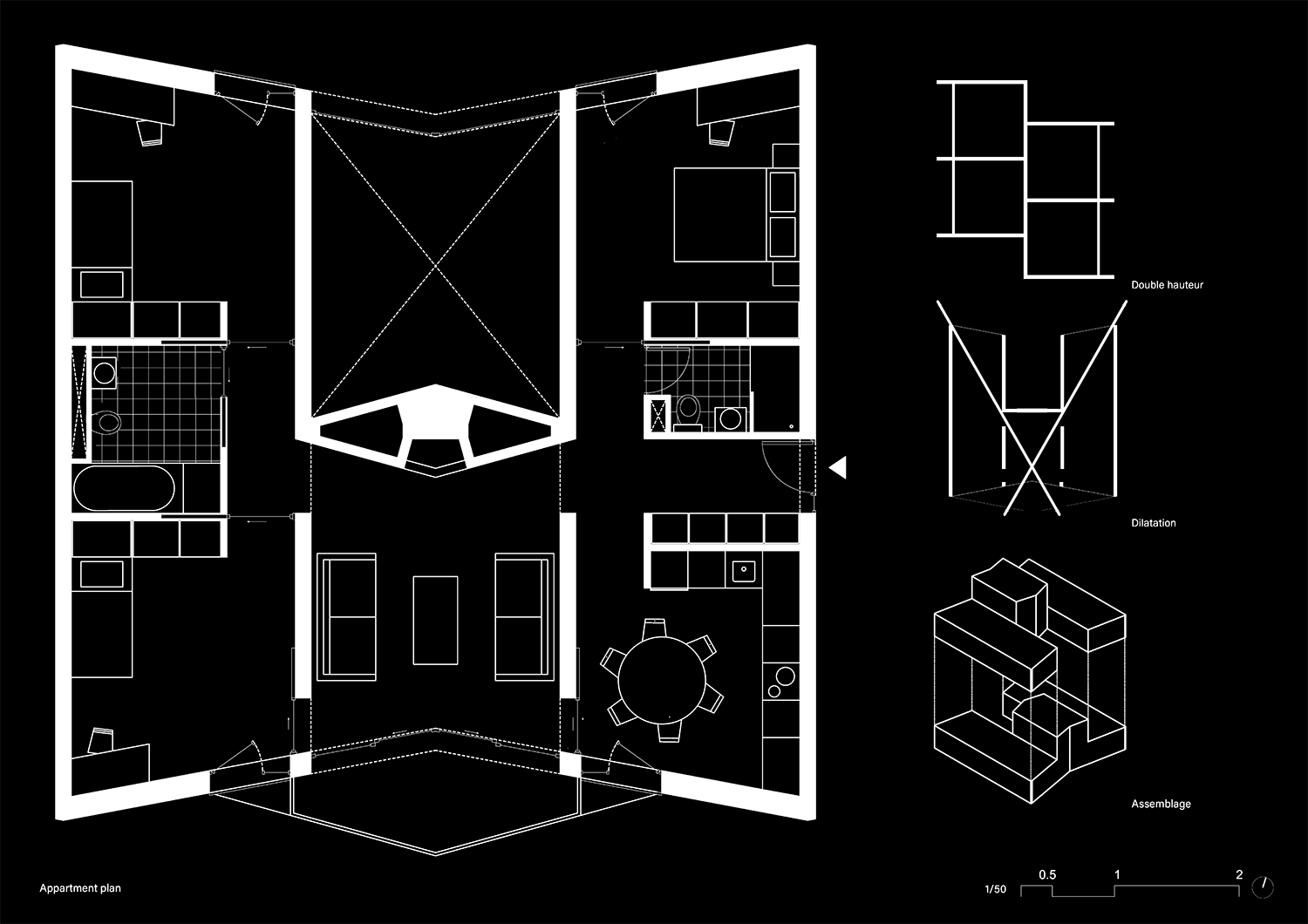
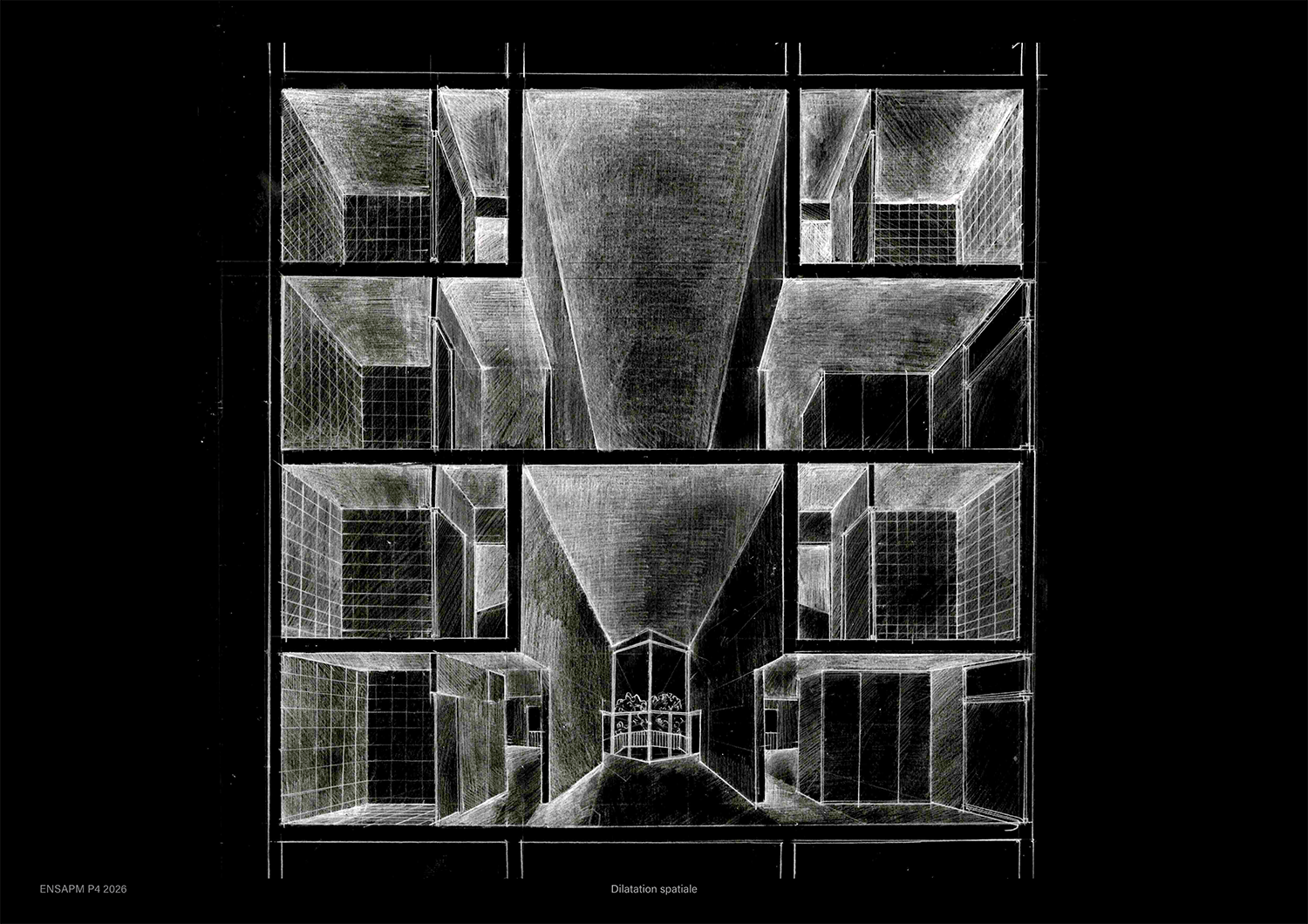
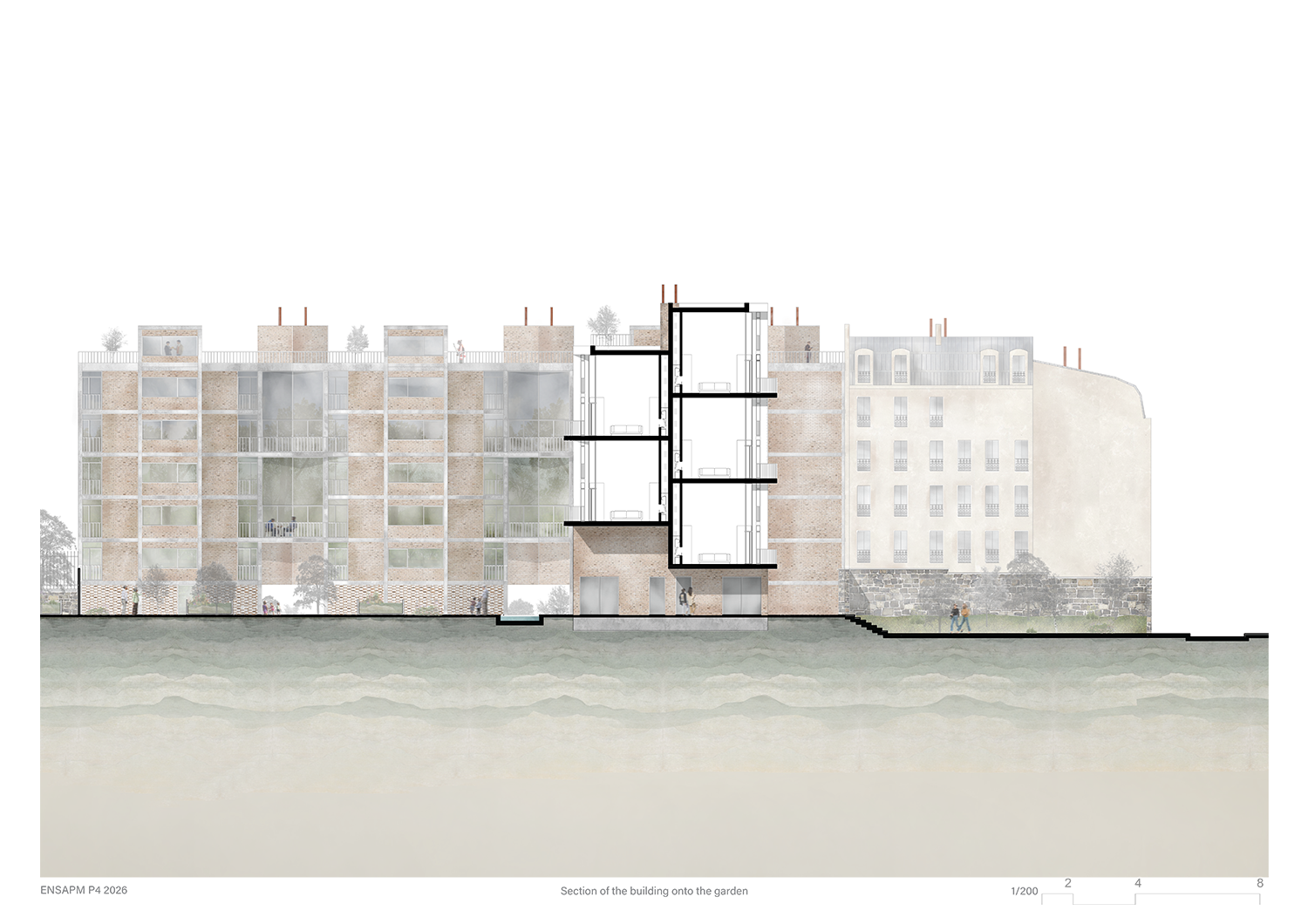
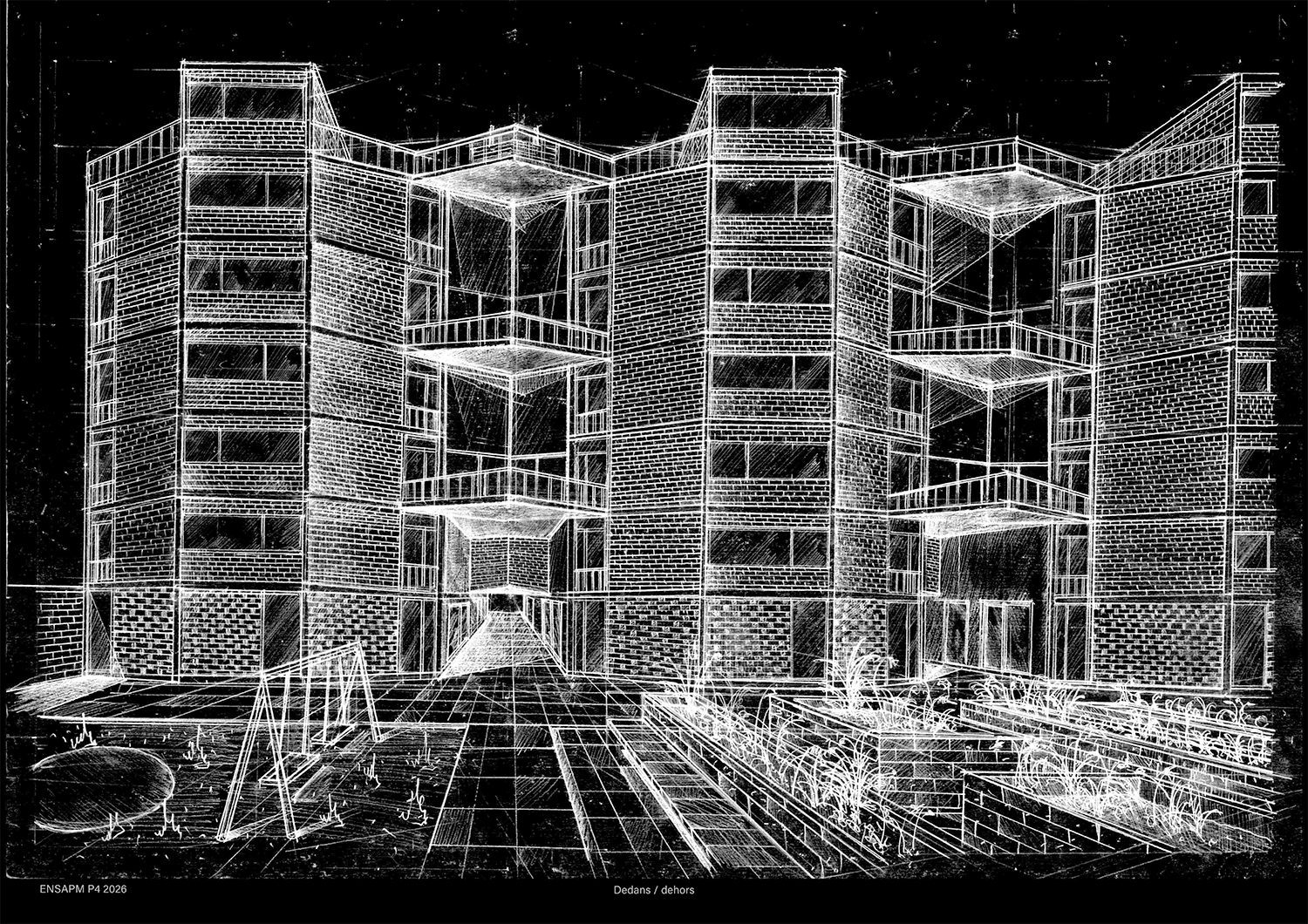
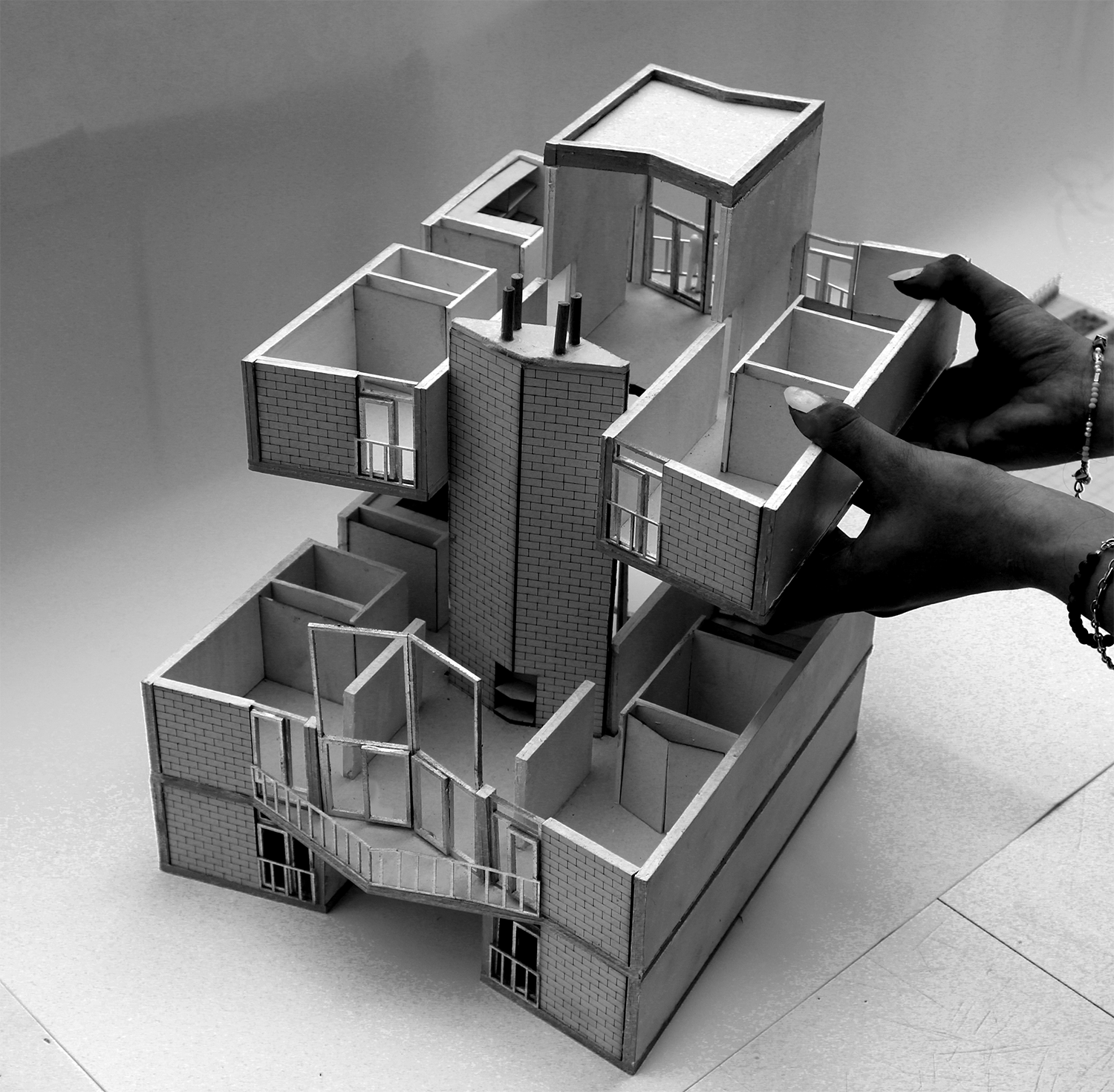
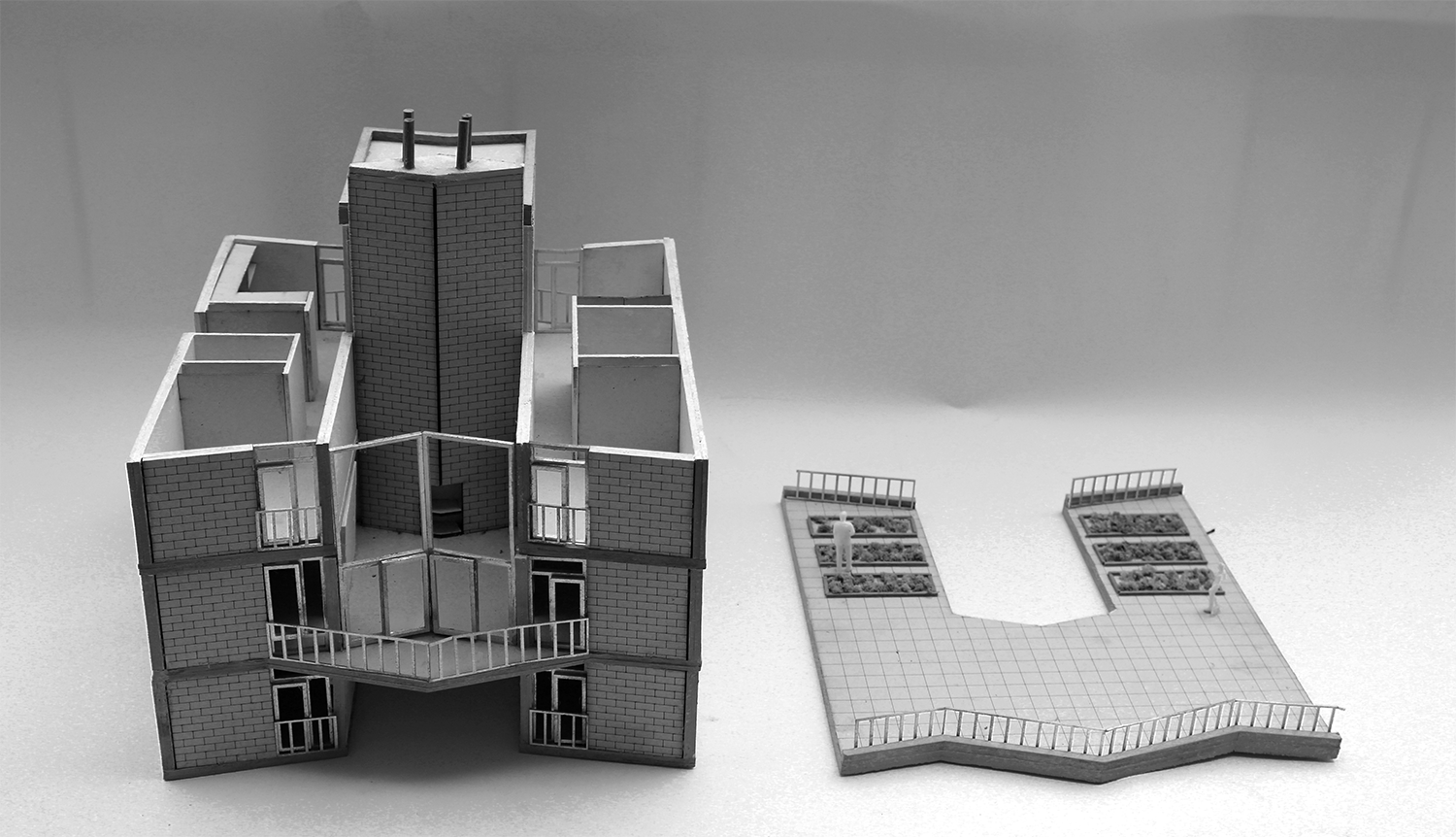
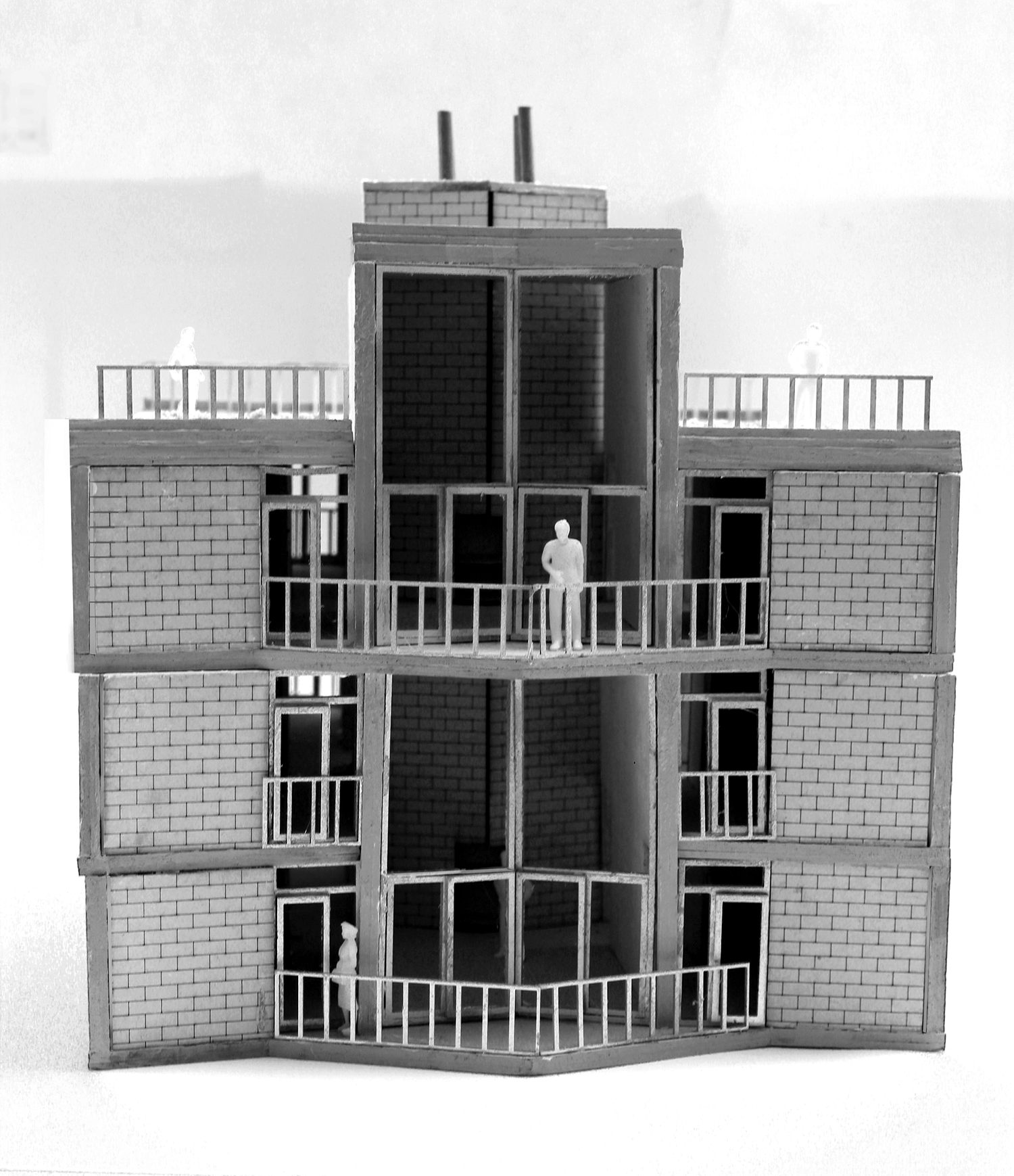
The project reimagines the dwelling as an “extended hearth,” acting as a spatial infrastructure that federates residents across multiple scales. At its core lies the chimney, fixed barycenter that organizes the plan. This heart is amplified by double-height volumes, where light, entering through diagonal apertures, sculpts the foyer and invites the exterior inside. The penetration of balconies into the floor plan creates a porous transition that blurs the boundary between private intimacy and the shared realm.
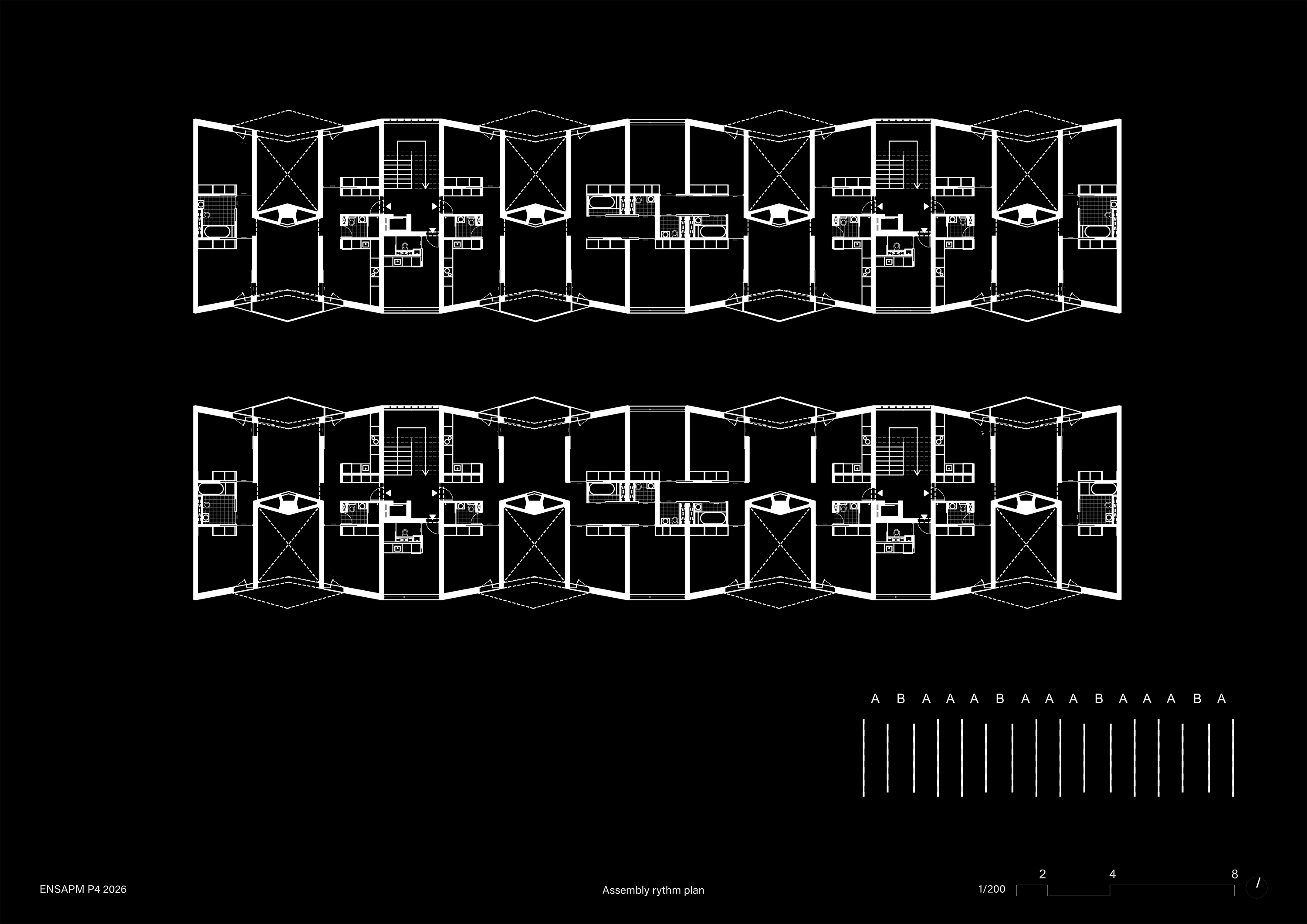
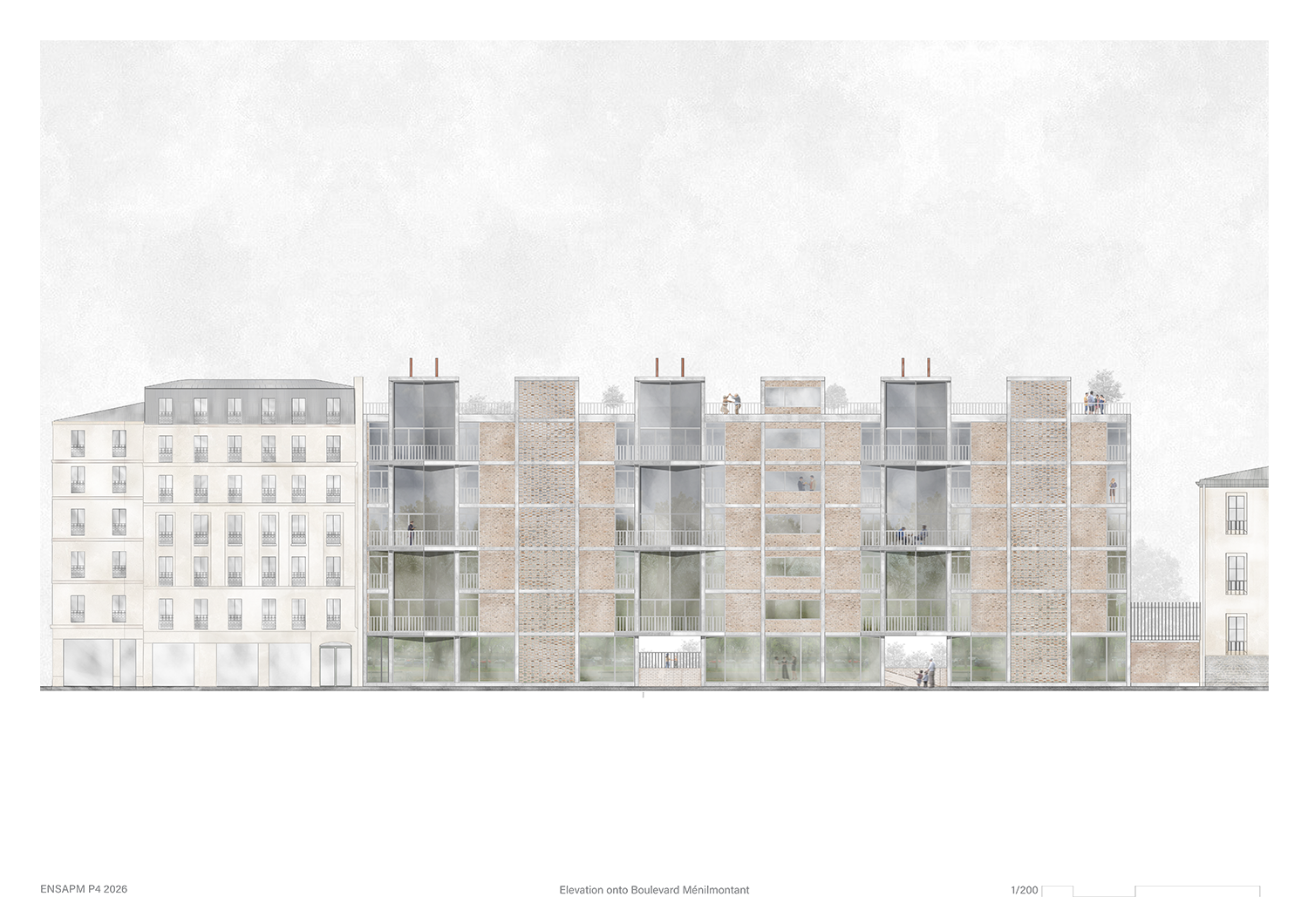
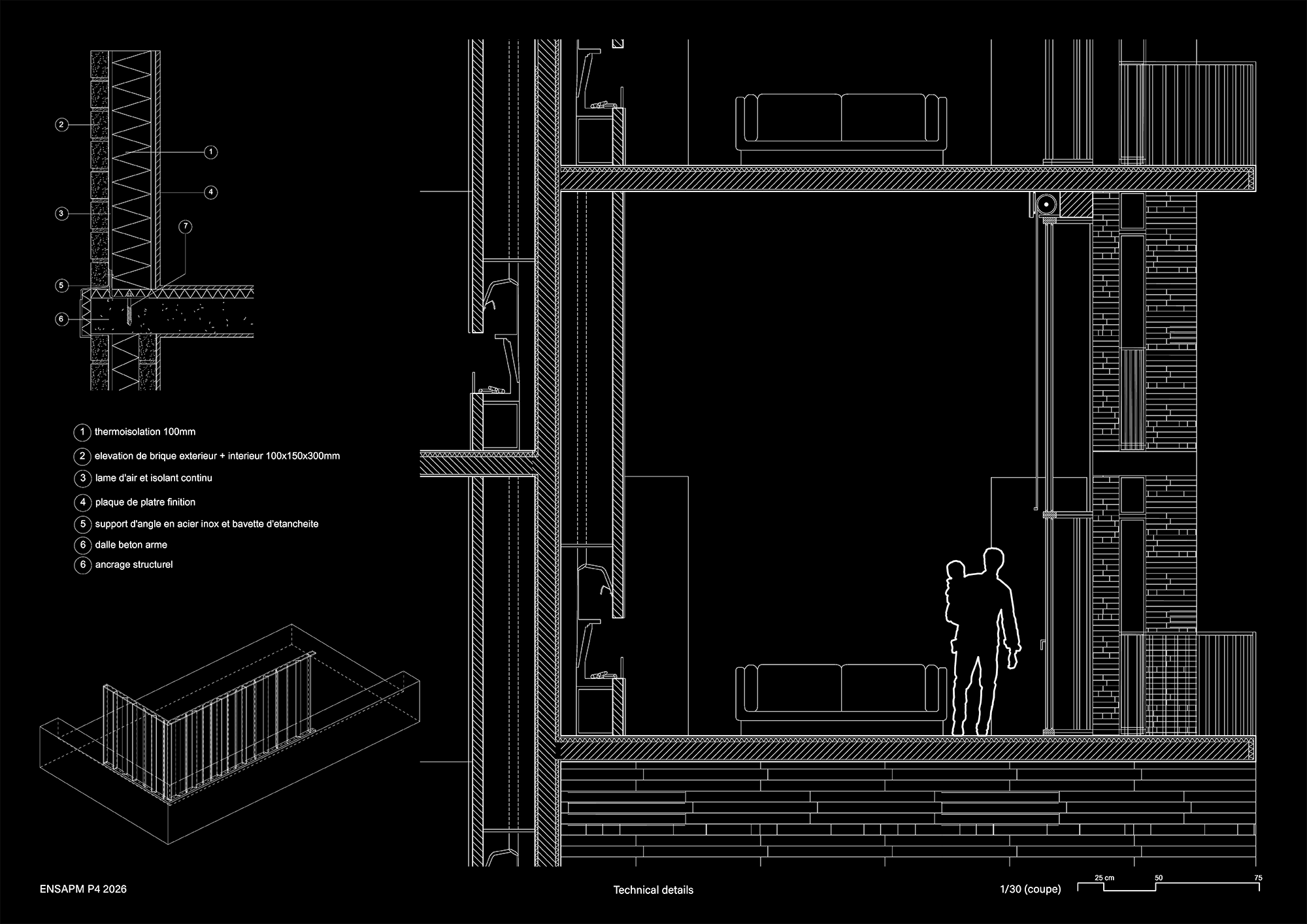
The double-height volumes are achieved through an interlocking “U” shape configuration, allowing apartments to imbricate and reorganize around the central hearth. The elevation expresses this through a structural language of concrete frames and brick; the latter extends into interior corridors, dissolving the limit between inside and outside. The facade maintains a hierarchical transparency, where double-height living areas communicate directly with the urban fabric.
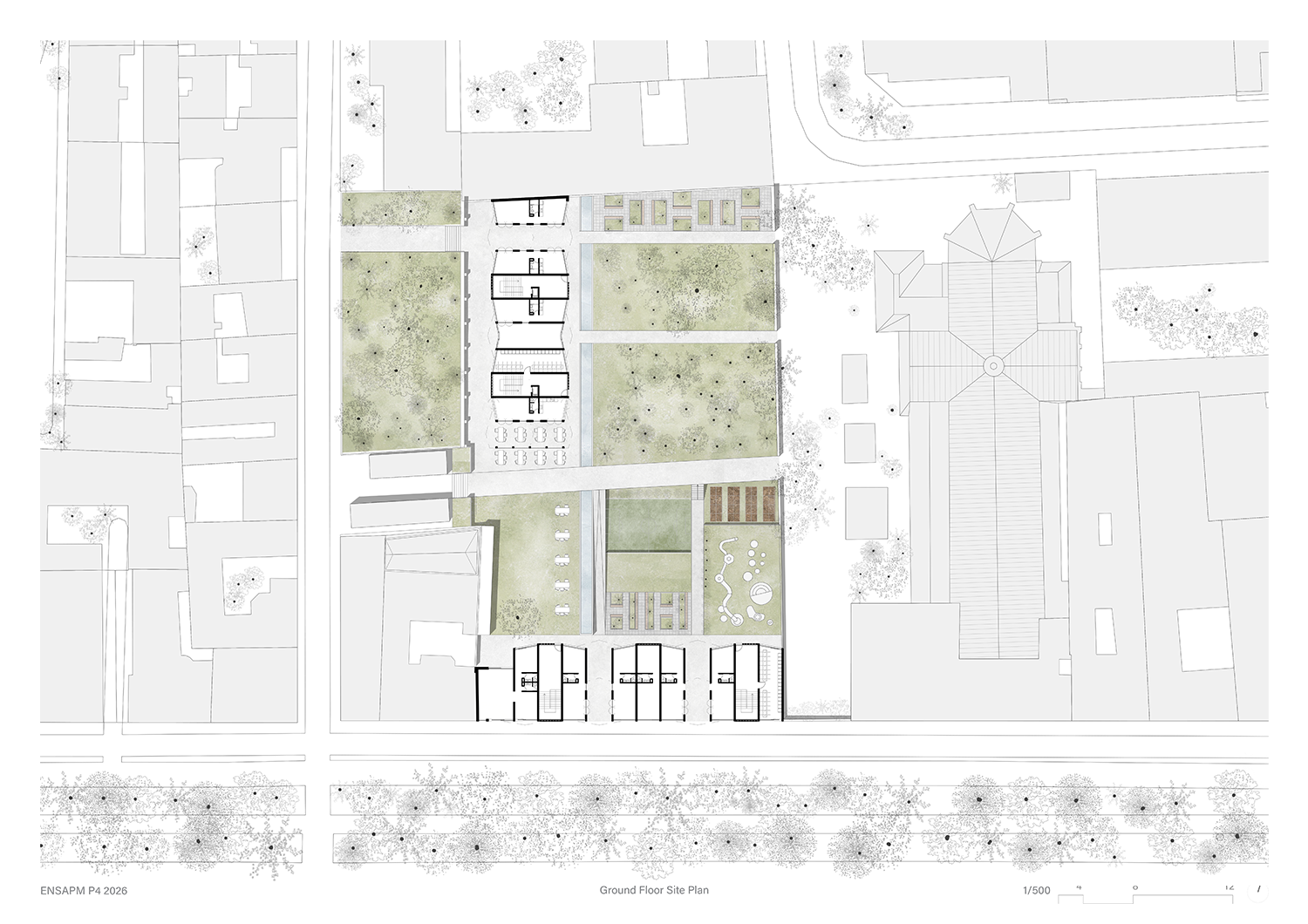
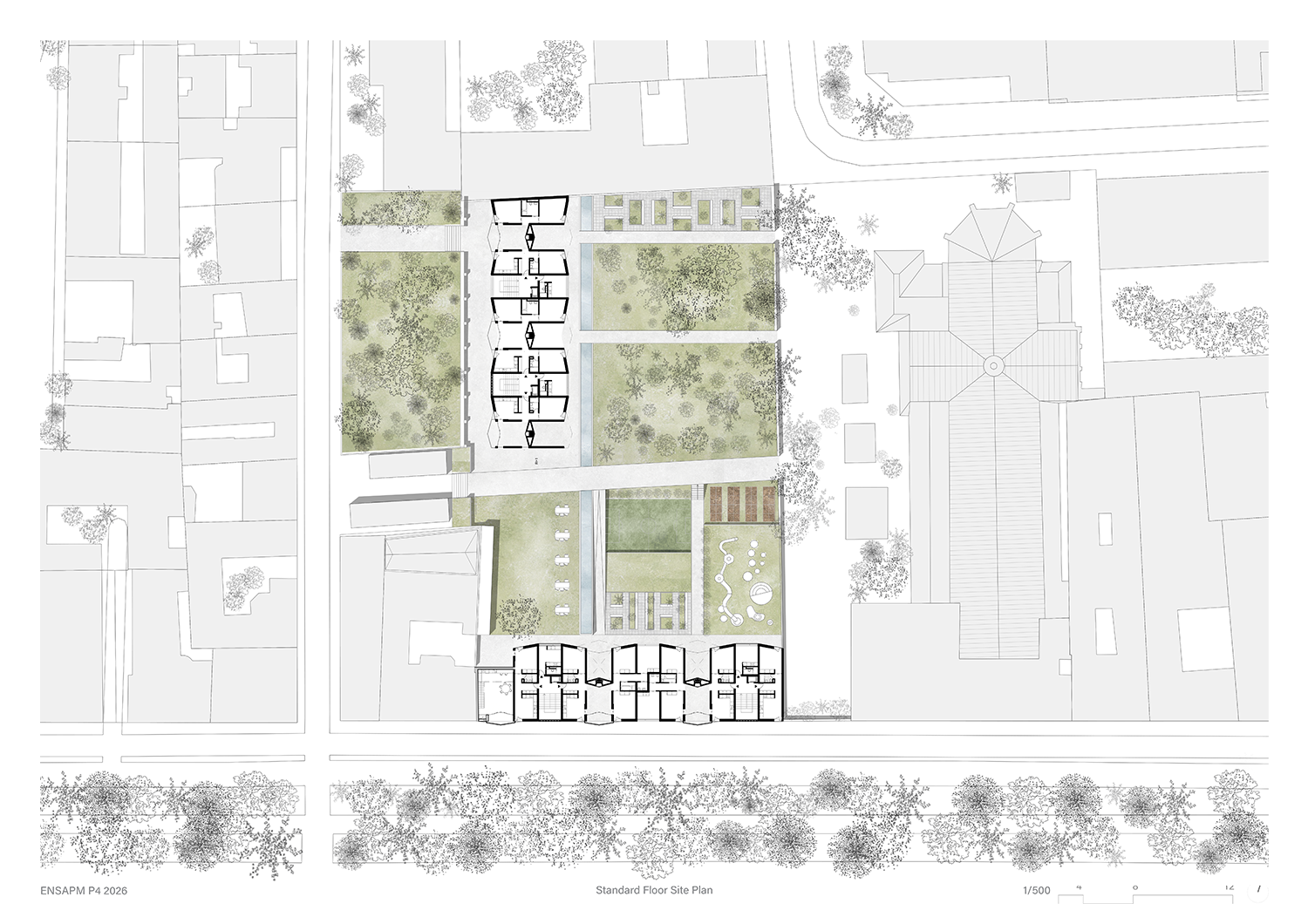
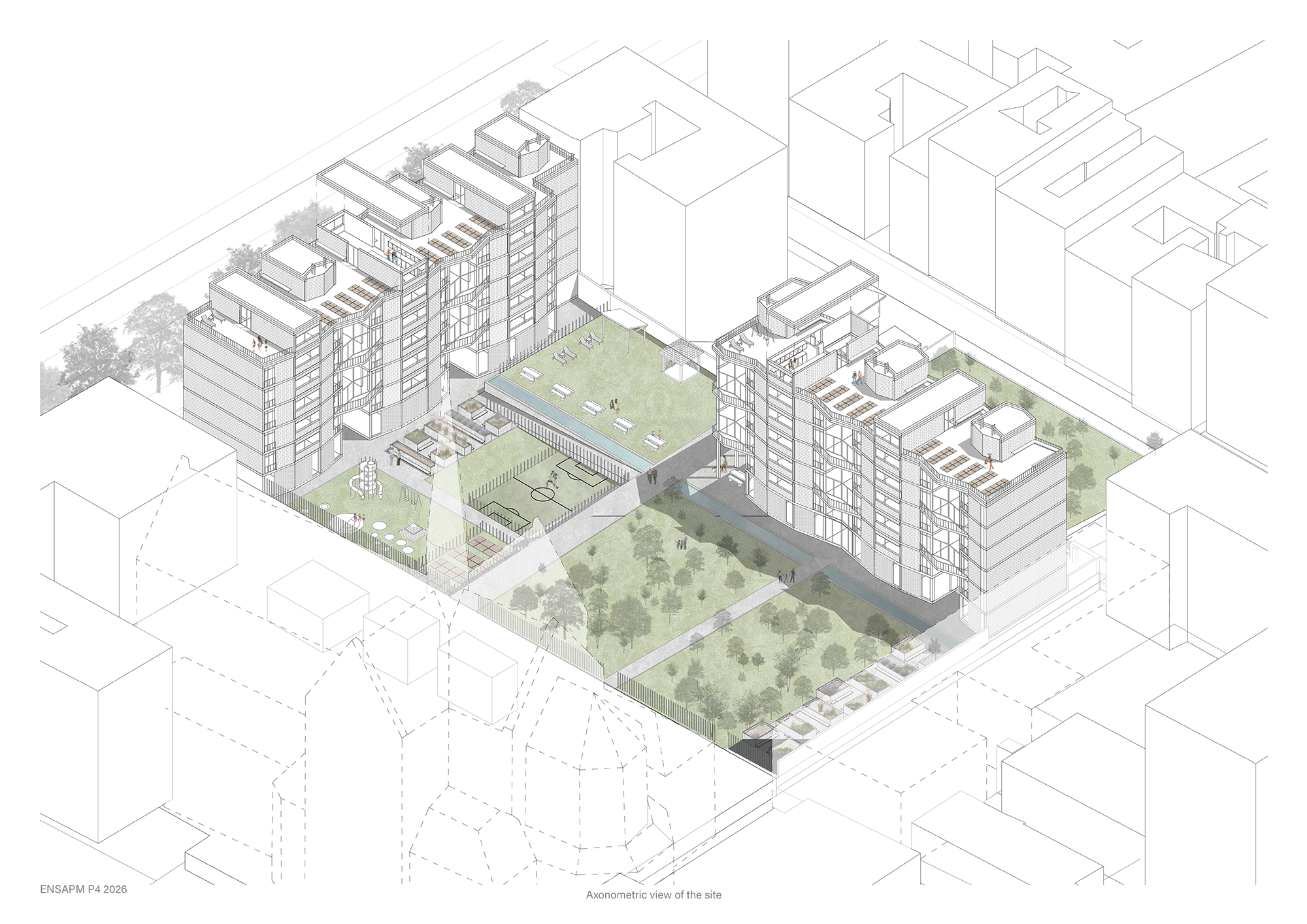
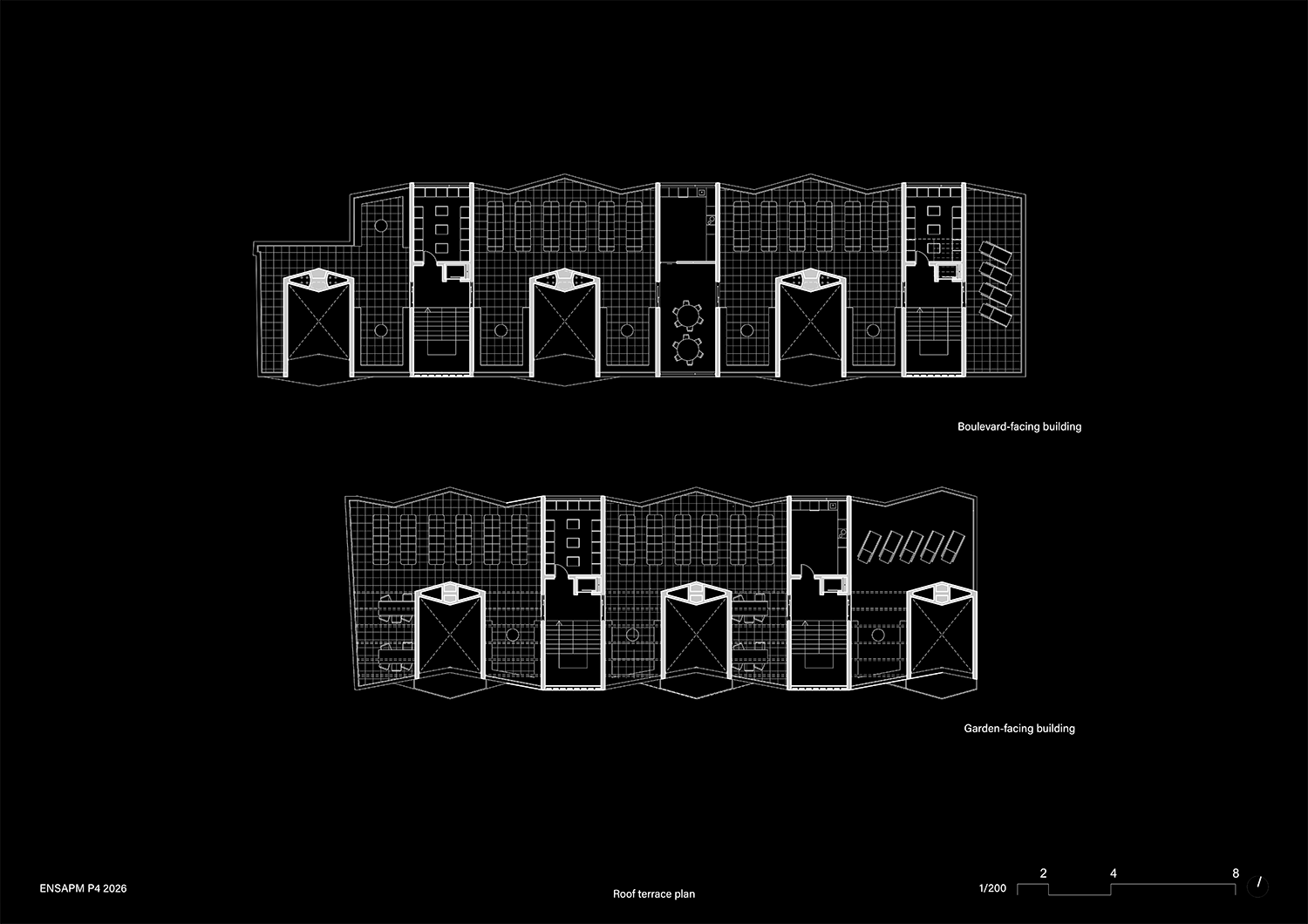
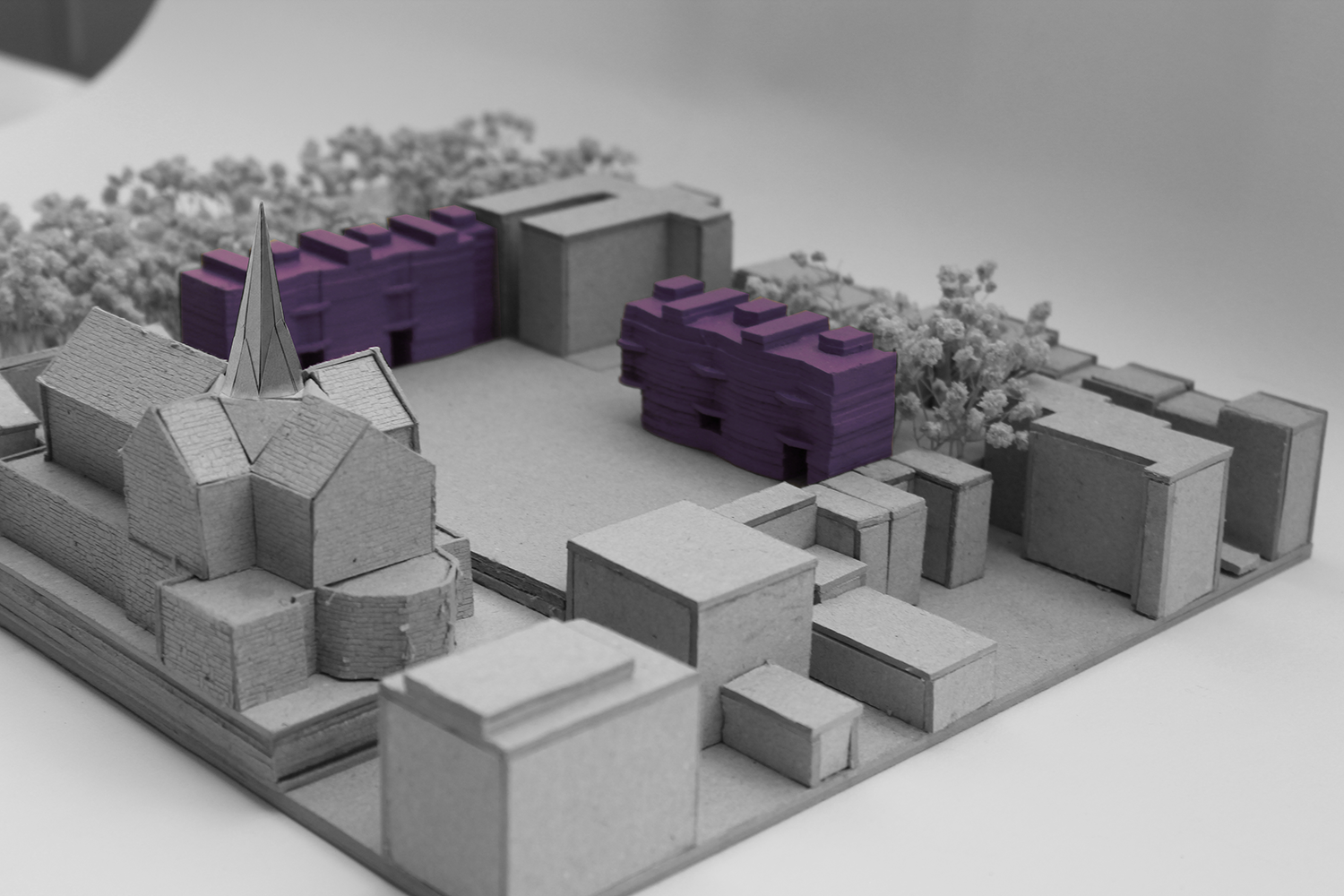
Grounded in a site defined by an existing community, the project adopts an attitude of subordination to the “already-there.” Rather than imposing a closed enclosure, the master plan preserves and enhances the existing communal landscape, completing the urban crown formed by the surrounding context. A sequence of thresholds manages the transition between public and private, using topography to navigate the flow from street-facing commerce to garden-protected workshops. Ultimately, the building functions as an open, evolving system; by providing communal tools: rooftop terrace, kitchens, and gardens; it relinquishes the desire for total control, instead leaving space for chance and the inhabitants’ own appropriation of the environment.